A guide for Garland homeowners
Choosing a garage door and opener for North Texas
Around here, the two things to plan for are hail and summer heat. Both come down to the same question: how thick is the steel, and is the door insulated?
Hail
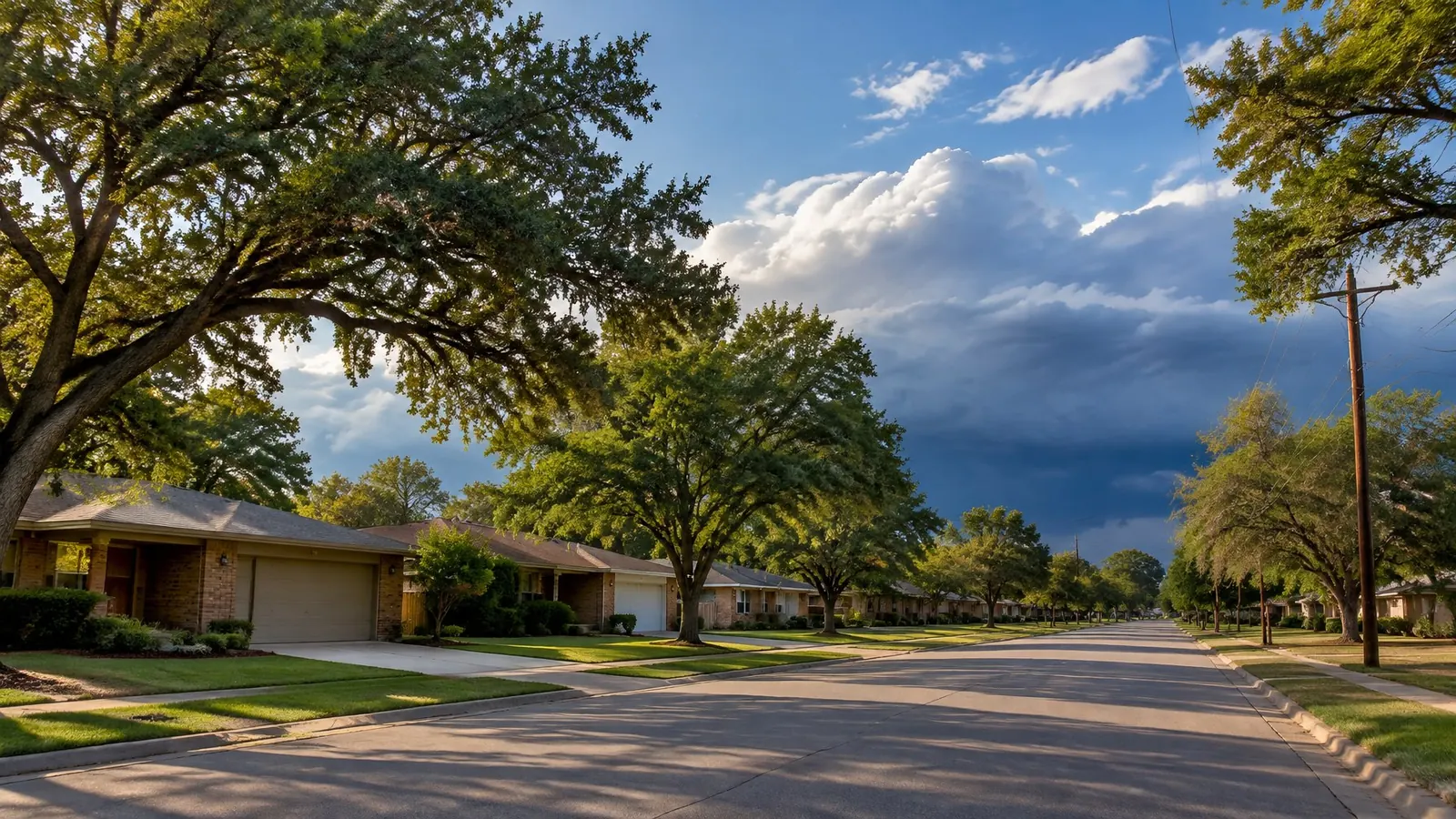
Large hail is close to a yearly event in the Dallas/Fort Worth area. Thicker steel dents less. Steel gauge runs backward, so a lower number means thicker steel.
Insulated doors with a steel skin on both sides are generally stiffer than a single thin layer. Also ask whether a damaged section could be replaced by itself, because that can save you from buying a whole new door.
Heat
July and August afternoons here often reach 100 degrees. If the garage shares a wall with a room you use, or you work in it, insulation is worth paying for. Compare core thickness and how well the sections seal at the edges.
If the room next to the garage is a bedroom, also think about opener noise. A belt drive is quieter than a chain, and a wall-mounted motor sits away from the ceiling.
Questions to bring
- What gauge is the steel, and what is the core made of?
- What comes with the door: rollers, hinges, springs, seals?
- Does the bottom seal fit your floor?
- Does the door have a published wind rating?
- What does the maker's written warranty cover, and who handles a claim?
Door stuck, or opener dead?
Call this number and tell the independent contractor you reach what the door is doing.