A guide for Garland homeowners
Garage door spring safety
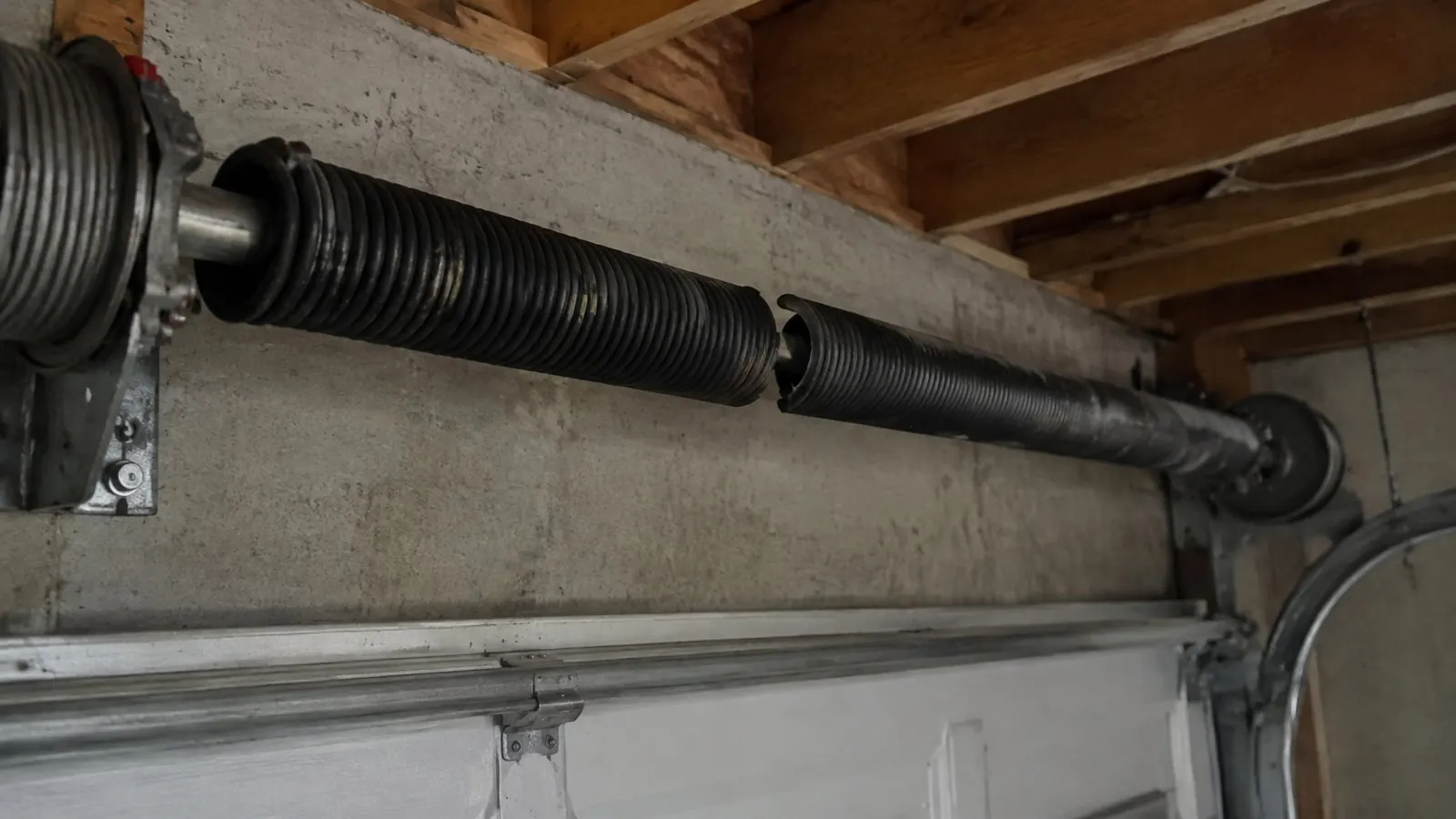
Don't adjust, loosen or replace a garage door spring yourself. Springs and cables hold the door's weight under high tension, and when they let go they can seriously hurt you.
What you must not do
- Loosen, tighten or wind a spring, or touch the bar it sits on.
- Remove or release a cable bracket at the bottom corner.
- Work under a door that's partly raised, or on one sitting crooked.
- Reuse a spring that has stretched or a cable that has frayed.
The cables stay under load even when the door is closed. This site gives no spring repair steps, on purpose.
What you can check from the floor
- A gap in the coil of a torsion spring.
- Frayed strands, kinks or a loose end on a cable.
- A door that isn't level as it moves.
- A roller out of its track.
- Bent or rusted hardware at the top and bottom.
The Consumer Product Safety Commission tells owners to check the springs, hardware and fittings, and to inspect the door and opener every 30 days. If you see any of the above, stop using the door and have it looked at.
Source: CPSC, Non-Reversing Automatic Garage Door Openers Are a Hazard.
Children and the wall button
The CPSC advises mounting the wall button as high as practical, out of a small child's reach, and keeping remotes away from children.
A closing door is a danger of its own, so test the reverse every month.
Source: CPSC opener safety sheet.
Door stuck, or opener dead?
Call this number and tell the independent contractor you reach what the door is doing.