Small parts, big noise
Garage door rollers, hinges and tune-ups
A door that has become loud or shaky often has worn rollers or loose hinges. Left alone, they make the door harder on the opener.
What you hear or see
| You notice | It often means |
|---|---|
| A scream or grind as the door moves | Dry or worn rollers, or a stiff hinge. |
| A shake that runs through the door | Loose hinge screws, or a track that has shifted. |
| A door that wobbles in the track | Rollers with flat spots, or tracks that are no longer parallel. |
| An opener that strains | Friction in the track is adding to the load. |
What to ask for
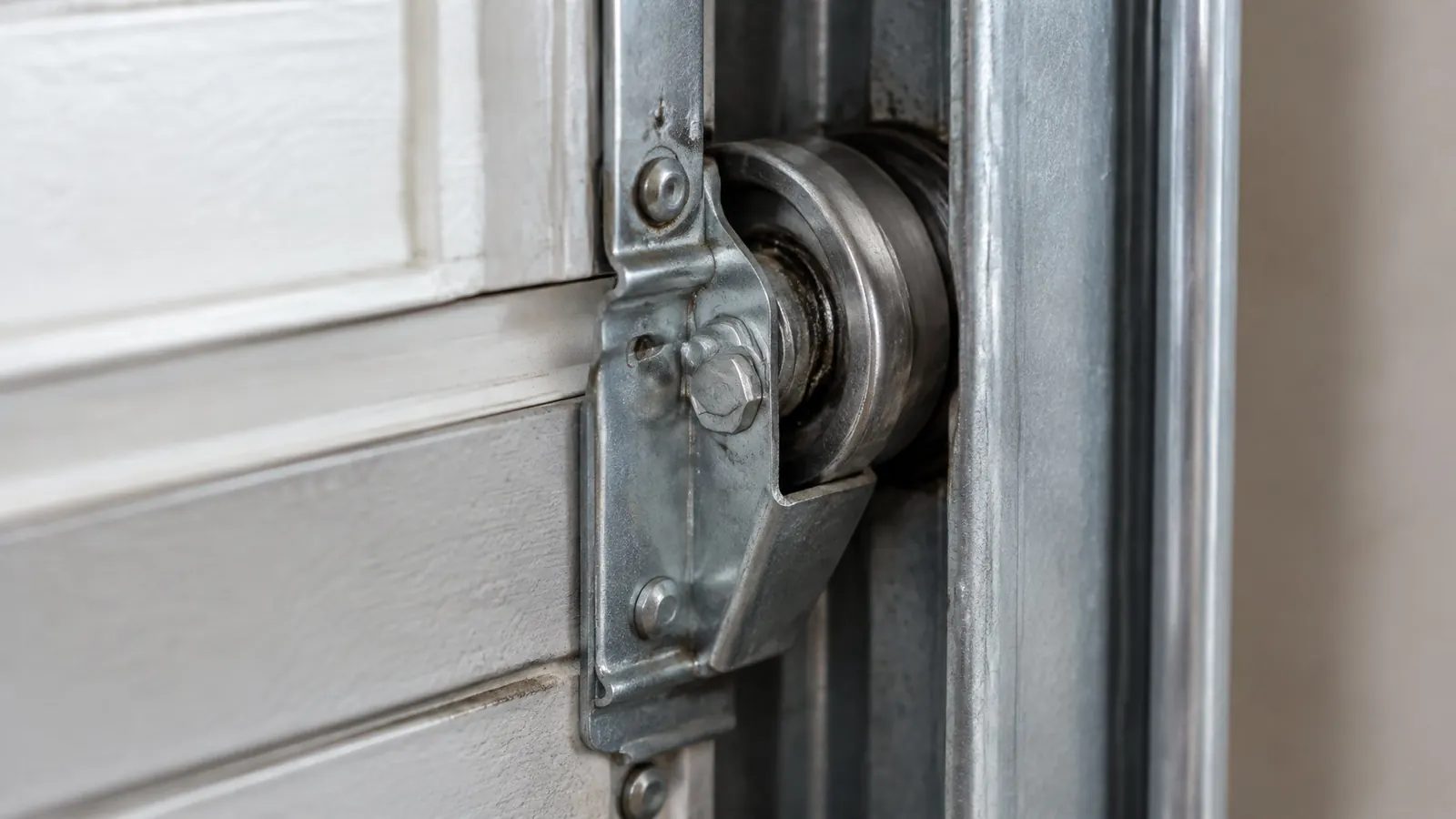
If noise is the complaint, ask about nylon rollers. They generally run quieter than bare steel. A tune-up should usually cover these:
- Looking over every roller, hinge, bracket and bolt.
- Tightening loose track and hinge hardware.
- Lubricating the parts that need it.
- Checking balance, cables, sensors and the reverse.
- Replacing parts too worn to keep.
What to leave alone
The springs, cables and bottom brackets carry the door's weight. Don't tighten or adjust them, even if they look loose. A slip can hurt you badly.
Door stuck, or opener dead?
Call this number and tell the independent contractor you reach what the door is doing.